


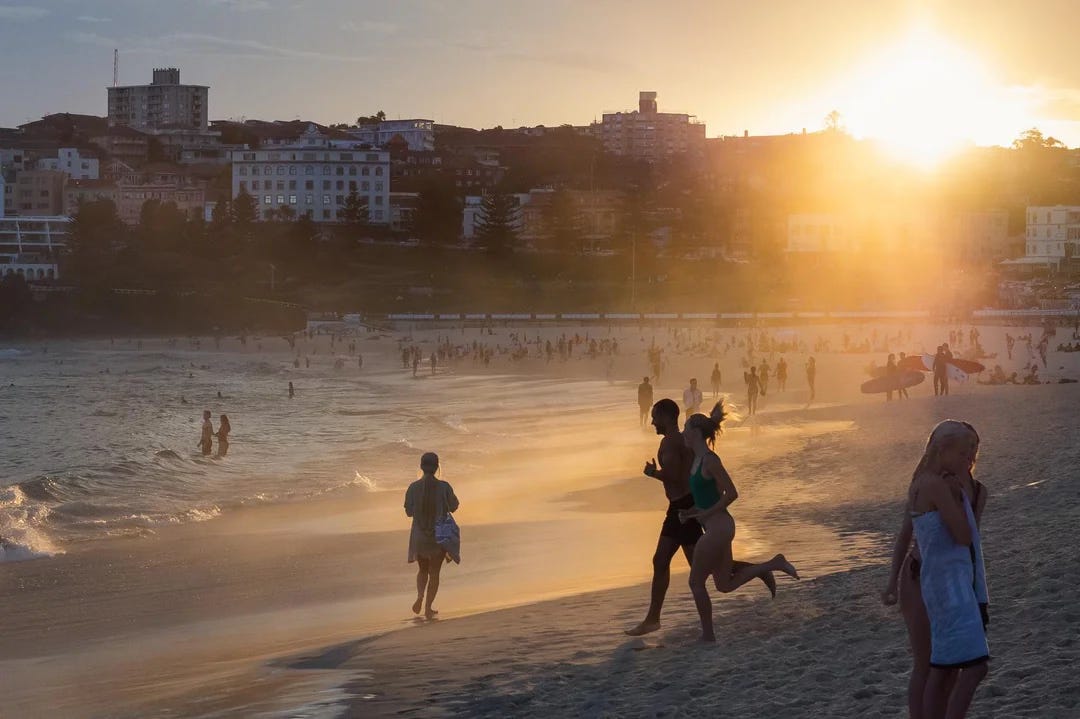
Yesterday, on the eastern edge of Sydney, Australia, at one of the country’s most famous beaches — Bondi Beach, a place known for sun, surf, families, and summer evenings by the sea — a Hanukkah celebration turned into a scene of terror. Hundreds of people had gathered for a “Chanukah by the Sea” event on the first night of Hanukkah, an annual festival that celebrates resilience and light in the darkest part of the year. Two gunmen opened fire on the crowd, killing at least 16 people, including a child, and injuring more than 40 others, according to authorities, in what has been widely described as an antisemitic terrorist attack targeting Jewish people simply for attending a holiday celebration. The shooters, believed to be a father and son, were confronted by police; one was killed and the other taken into custody. Officials have said this was a deliberate attack on Jewish worshipers and families gathered in one of Sydney’s most open, public places.
For many people reading this, that may feel distant. Another headline. Another place far away. But it is worth naming plainly: people were killed not because of where they were, but because of who they were and what they believed.
That reality reframed something for me. I had planned to expand on this later, but it seems more important to do it now.
Earlier this fall, I attended Yom Kippur services with my partner. It was my first time. The atmosphere was quiet, solemn, deeply inward. A day built around reflection, accountability, and humility.
Outside the synagogue, there was a police car parked near the entrance. Two officers standing watch.
I remember commenting on it at the time, almost offhandedly. I asked if it was because Yom Kippur is a High Holy Day. Maybe they expected a crowd. We were in a busy urban area. Maybe it was just precaution.
No, my partner said. They’re always there.
That was the moment it clicked.
I understood my privilege then, not abstractly, but viscerally. I grew up Catholic. We didn’t attend church every Sunday, but we kept the traditions and beliefs. Christmas Eve. Easter. The familiar rhythm of it all. Later, we raised our children Catholic and, for stretches of time, attended Mass consistently. I’m no longer a practicing Catholic, but I do consider myself Christian in the older sense of the word, before it became an identity rather than a personal belief system.
It would have shocked me to see police stationed outside a church on Christmas or Easter. That absence of fear felt normal. Invisible. Assumed.
Only later did I realize how unevenly that assumption is distributed.
For some communities, worship is not something you enter casually. It is not protected by default. It requires vigilance. Planning. Security. Not because of crowd size or logistics, but because history and experience say otherwise.
Anyone who practices their faith as part of a visible minority knows this feeling. Anyone whose beliefs mark them as different understands that gathering itself can be an act of courage.
I’ve spent the past several days sharing warm memories. Christmases layered in light, excess, and nostalgia. I don’t regret that. Those memories matter. But they exist alongside something else that deserves to be named.
Not everyone gets to indulge freely this time of year.
Not everyone gets to assume safety as part of the ritual.
Not everyone gets to worship without protection.
This isn’t about guilt. It’s about awareness.
Before the lights come back on, it’s worth pausing to recognize that comfort and safety are privileges, not guarantees — and that something as simple, personal, and pure as going to worship is not experienced equally by everyone.
Further Reading
I keep a running collection of books that shaped this project on Bookshop.org.
Purchases there support independent bookstores—and help sustain this work.
Stay Connected
📖 Subscribe to Caleb Reed for weekly chapters and essays.
📸 Follow along on Instagram: @caleb_writes
📘 Facebook: Caleb Reed
🦋 Bluesky: @thecalebreed.bsky.social
Tim thanks for the restack…