

The Nickelodeon Boys
Realizing decades later that my “favorite characters” were probably my first crushes

This weekend I learned something that unlocked a memory I hadn’t thought about in at least thirty years.
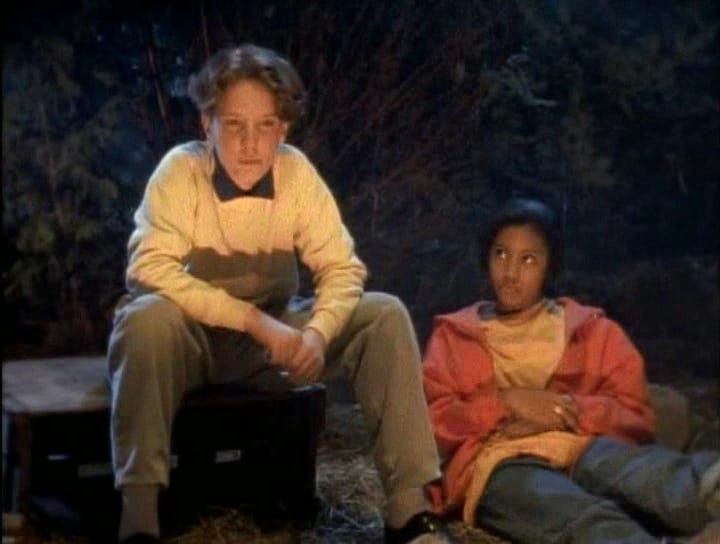
The creator of Heated Rivalry, Jacob Tierney, was once a child actor on Nickelodeon’s early-’90s series Are You Afraid of the Dark?
When I saw the clip, something in my brain immediately lit up.
Not the plot.
Not the episode.
Him.
And it took me about two seconds to realize why.
I’m pretty sure I had a crush on him. I would have been about 13 at the time, so it makes sense.
The strange part is that I had absolutely no idea that’s what it was at the time.
When you’re a closeted kid, attraction doesn’t show up as attraction. It shows up as fascination.
You don’t think, I have a crush on him.
You think:
He’s my favorite character.
I like the episodes he’s in.
He’s funny.
He’s interesting.
I hope he’s in this one.
Your brain records the signal, but it files it under the wrong label.
Looking back, my childhood viewing habits suddenly make a lot more sense.
There was Budnick on Salute Your Shorts, played by Danny Cooksey. Bright red hair, permanent smirk, always stirring up trouble at Camp Anawanna.
There was Ted on Hey Dude, played by David Lascher, leaning casually against a horse stall with the floppy ’90s hair that made him look like he’d wandered in from a teen magazine photo shoot.
There was Billy on Fifteen, played by none other than Ryan Reynolds. Imagine my surprise when I saw Van Wilder years later. What a glow-up.
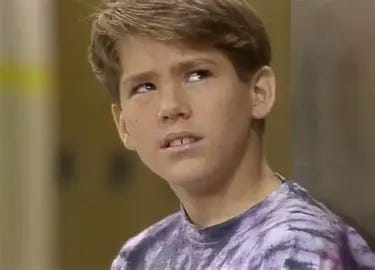
There was Big Pete from The Adventures of Pete & Pete. Played by Michael C. Maronna (he also played one of the McCallister kids in Home Alone). Thoughtful. Slightly awkward. Always narrating the strange anxieties of growing up.
And apparently there was also Alex, played by Jacob Tierney, quietly telling ghost stories in the first season of Are You Afraid of the Dark? while some kid in South Carolina watched Nickelodeon and thought he just really liked the show.
It turns out I didn’t just like the show.
I liked the boys.
But looking back now, the thing that really stands out isn’t just that those characters were cute.
It’s that they had real emotions.
They argued with each other.
They worried about hurting someone’s feelings.
Sometimes they cried.
Sometimes they apologized.
They cared what their friends thought of them.
That may not sound remarkable now, but compared to the rest of the culture at the time, it was very different.
The boys around me were supposed to be tough. Unbothered. Competitive. If they had feelings, they were expected to swallow them.
But the Nickelodeon boys didn’t do that.
Budnick could be rebellious and sarcastic, but he still cared about his friends.
Ted might act cool, but he worried when he hurt someone.
Big Pete spent half the show narrating his own anxieties about the world.
They were funny, messy, and emotional in ways that felt strangely real.
For a kid growing up in the late ’80s and early ’90s, that was a completely different window into what boyhood could look like.
Another thing younger readers may not realize is that when I was a kid, television wasn’t really made for us.
Not the way it is now.
Before cable expanded, TV was mostly programmed for adults. Kids got a few hours of cartoons on Saturday morning, and that was about it. The rest of the time you watched whatever the grown-ups were watching.
News. Sitcoms. Crime shows. Prime-time dramas. These shows followed a strict formula and the men depicted in them fit a certain type.
Then along came Nickelodeon.
For the first time, there was a channel that treated kids and teenagers as an audience worth programming for all the time, not just for a few hours on Saturday morning.
And the tone of those shows was different from almost anything else on television. Many of Nickelodeon’s early programmers came from Canadian television and public broadcasting—very different creative environments from the American Big Three networks.
Instead of action heroes or competition, you got stories about:
kids working at a ranch
summer camp friendships
suburban weirdness
ghost stories told by nervous teenagers
They were shows about relationships.
Which meant the boys on those shows were allowed to do something boys in the real world often weren’t encouraged to do.
They were allowed to feel things. That was a completely different window into what boyhood could look like.
And for some of us, it mattered more than we realized at the time.
(And yes, like many institutions that shaped childhood in that era, Nickelodeon later had its share of ugly revelations behind the scenes. None of that changes what those shows meant to the kids who watched them at the time.)
For a while, at least, those stories gave us something that didn’t exist many other places in the culture.
They showed boys who were allowed to feel things.
There was one other thing Nickelodeon gave me that I didn’t fully appreciate at the time.
When the kids’ shows ended, the channel quietly turned into Nick at Nite.
Suddenly the same television that had spent the afternoon at summer camp was showing sitcoms from decades earlier.
I Love Lucy.
The Dick Van Dyke Show.
The Mary Tyler Moore Show.
Leave it to Beaver.
As a kid, I didn’t realize I was watching a kind of living archive of television history.
I just watched it.
Which means that somewhere along the way I ended up seeing most of the classic television shows from the 1950s and ’60s, the sitcoms and dramas of the ’70s and ’80s, the rise of cable in the ’90s, the era when HBO turned Sunday nights into prestige television, and now the streaming world where entire libraries of content exist at the click of a remote.
It’s a strange cultural vantage point.
There aren’t that many people alive who can say they’ve watched that entire arc unfold in real time.
From black-and-white reruns
to Nickelodeon summer camp sitcoms
to HBO redefining television
to streaming platforms dropping entire seasons overnight.
We’ve seen all of it.
The funny thing is that when I was a kid watching those Nickelodeon shows, I had no idea I was also learning something about myself.
I thought I was just watching television.
It turns out I was paying attention to the boys.
The ones who felt real.
The ones who had emotions.
The ones who didn’t quite fit the tougher version of masculinity the rest of the culture seemed to prefer.
At the time, they were just my favorite characters.
It would take a few more decades to realize they were also my first crushes.
The last thing I’ll say about all of this is something I find a little strange to think about sometimes.
Our generation may have quietly witnessed the entire rise—and possible decline—of television as the central form of entertainment in American life.
When I was growing up, television was the thing.
Families planned evenings around it. Entire cultures formed around certain shows. People talked about what had happened on television the next day at school or at work because everyone had watched the same thing the night before.
There were only so many channels. Only so many choices.
Which meant that television carried an enormous cultural weight.
And in my case, it meant Nickelodeon became one of the places where I first saw boys who felt emotionally recognizable in ways the rest of the culture didn’t quite allow yet.
But when I look at my kids now, I realize how much that world has changed.
They’ll put on a movie, sit on the couch, and then spend half the time looking at their phones.
The screen is still there, but it isn’t the center of gravity anymore.
Television used to pull our attention together. Now it’s just one thing competing for it.
Which makes it a little strange to think about how powerful it once was.
For my generation, a cable channel could shape how we saw friendship, masculinity, humor—even ourselves.
Kids telling ghost stories around a camp fire could leave a memory that lasted thirty years.
Apparently longer.
That kind of cultural influence feels harder to imagine now.
But for those of us who grew up during that window—between the black-and-white reruns of Nick at Nite and the explosion of cable in the ’90s—it was very real.
We didn’t know it at the time.
We thought we were just watching television.
It turns out television was quietly watching us grow up.
Further Reading
II keep a running collection of books that shaped this project on Bookshop.org.
Purchases there support independent bookstores—and help sustain this work.
Stay Connected
📖 Subscribe to Caleb Reed for weekly chapters and essays.
📸 Follow along on Instagram: @caleb_writes
📘 Facebook: Caleb Reed
🦋 Bluesky: @thecalebreed.bsky.social
I really relate to this. Several guys on TV (and in real life) held my attention.