


The moment I knew Christmas couldn’t keep happening the way it had was on Christmas Eve Eve, somewhere on the highway between South Florida and New Jersey.
It was a long, punishing drive—the kind that reduces days to rest stops and gas stations and the constant sense that you’re either behind schedule or about to be. Our first child was still small then—about eight months old—and everything about the trip revolved around him. Feeding schedules. Nap windows. The careful choreography of stopping and starting so he wouldn’t completely unravel. Our corgi, still a puppy himself, was a champ.
Christmas, meanwhile, existed somewhere else. Waiting. Already underway in someone else’s house.
I remember watching the miles tick by and feeling a quiet grief I didn’t yet know how to articulate. Christmas, the season that had once felt like a world you stepped into, had been reduced to logistics. Arrival times. Expectations. Exhaustion. It wasn’t that anything was wrong. It was that something essential was being thinned out by motion.
Christmas is for kids.
That thought arrived without drama, but it lodged itself firmly. And kids shouldn’t spend Christmas in transit. They shouldn’t associate the season with car seats and rest stops and adults who are too tired to be fully present.
That was the year I decided that from now on, Christmas would come to us.
There was no announcement. No family meeting. Just a private vow made somewhere between lanes of traffic. If Christmas was going to matter, it needed roots. It needed to live where the children lived. It didn’t matter that our son wouldn’t remember it. That wasn’t the point. Traditions don’t wait for memory. They begin when someone decides to build them anyway.
So began the era of hosting.
Each year after that, my family or my in-laws would join us, depending on whose turn it was. We agreed to rotate Thanksgiving and Christmas, and to travel for Thanksgiving. The house became the destination instead of a waypoint. We stopped being the ones arriving late and started being the ones who had already lit the lights.
Once that shift happened, something inside me clicked into place. I wasn’t recreating my childhood out of nostalgia. I was protecting it from erosion, and paying forward what my parents had done for my sister and me.
I wanted to recreate the warmth I grew up with—down to the smallest, most trivial details. Not because I was chasing an image, but because I knew how fragile the feeling was. Warmth doesn’t survive abstraction. It survives specificity.
The Smell of Christmas potpourri had to be there—and potpourri is no longer the fad it was when I was growing up. I had to search for it. I could pick up a bag in a shop and immediately tell if it was from last year. Not something similar. Not a candle, a spray, dusty reeds, or a Wi-Fi–enabled device emitting scent on a timer. They aren’t the same. Scent is the fastest way back to a memory, and I wanted the house to announce itself the moment someone stepped inside.
I tracked down a set of drunken reindeer glasses on eBay identical to the ones my aunt had owned, because it mattered that they were right, even if no one else noticed.

I built lighted villages piece by piece—well after their 1990s heyday. It’s a Wonderful Life came first, from Walgreens, driving town to town to track down the last few buildings as supply thinned out. Then A Christmas Story. Then Christmas Vacation. Each one assembled slowly, deliberately, as if proximity mattered. The Advent House came later, after years of wanting it, because some things refuse to be rushed.
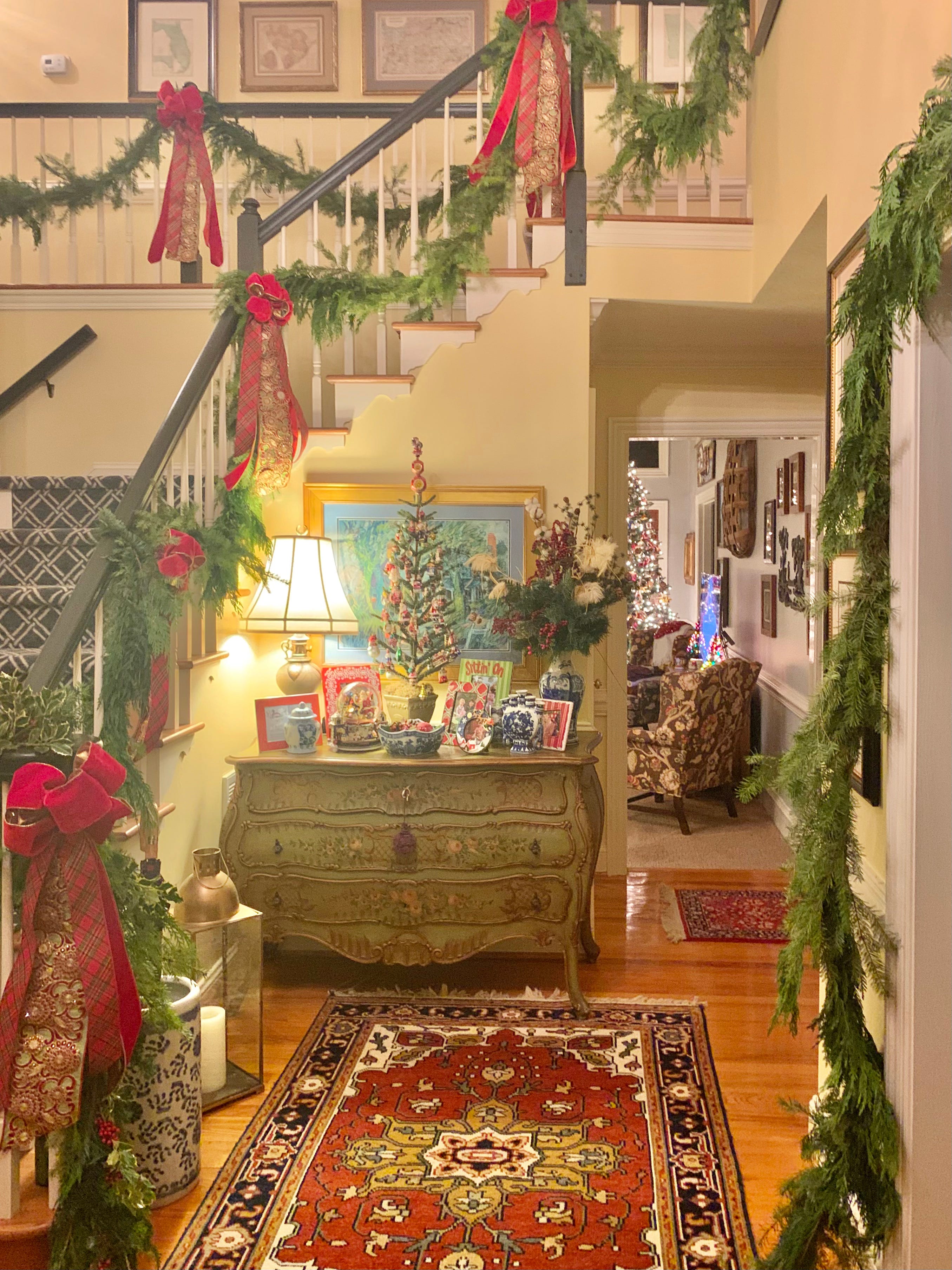
There was a tree in every room. Five in total.
The formal living room tree.
The kids’ tree.
The “vintage” tree in the family room - indulging my childhood desire for a flocked tree.
The needlepoint ornament tree.
The Radko Little Gems feather tree—the one sold only to Radko dealers for display (stolen from my mother’s store, along with most of the gems themselves).
Each had its own logic. None were accidental.
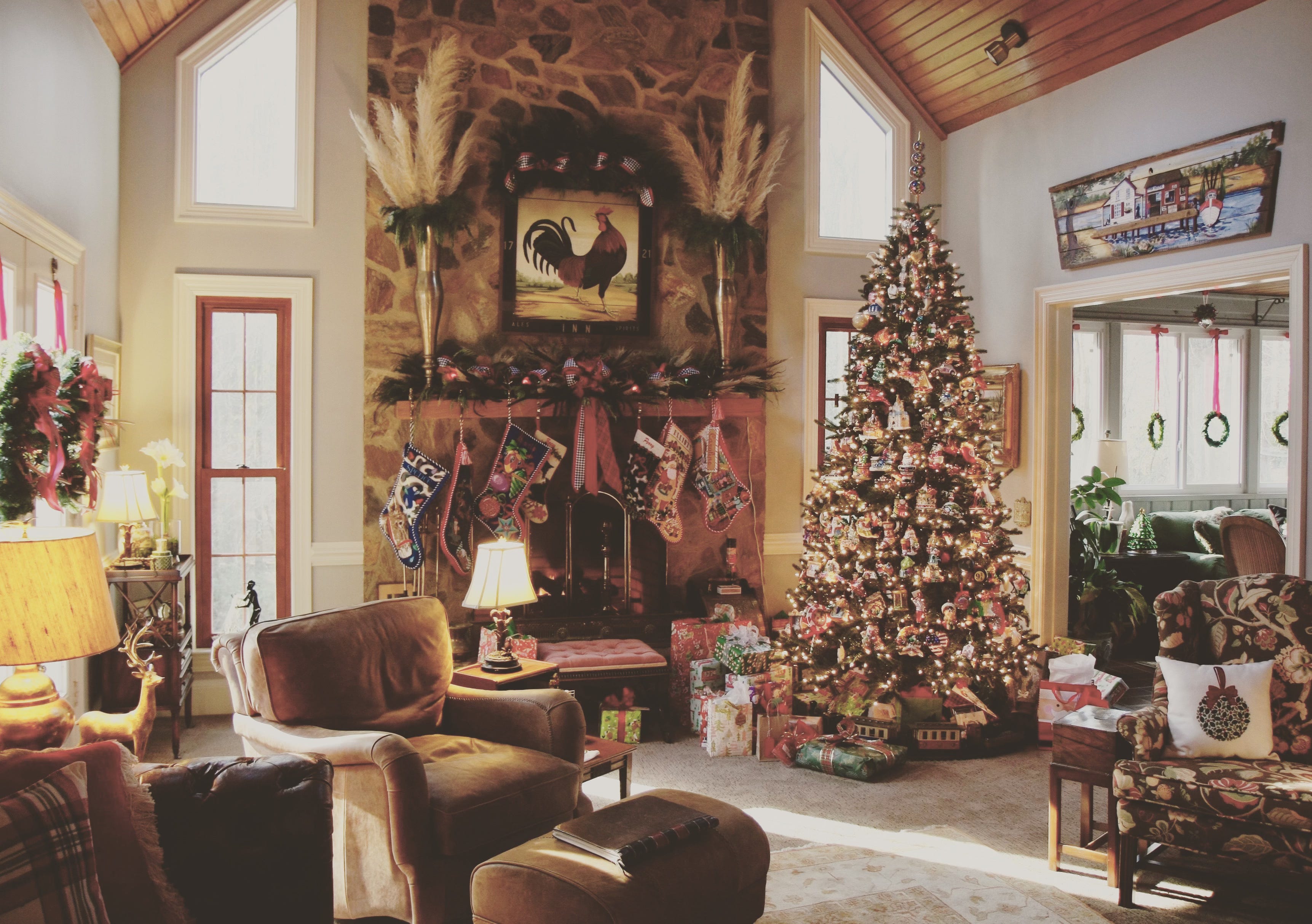
The train came back out and performed handsomely for decades—the engine replaced only recently with New Old Stock tracked down on eBay so it would be identical. The movies returned in rotation. Outside lighting was planned months in advance, not because anyone demanded it, but because I needed the season to feel intentional. Also because my father would NOT put up any Christmas lights.
I wasn’t decorating.
I was constructing a container.
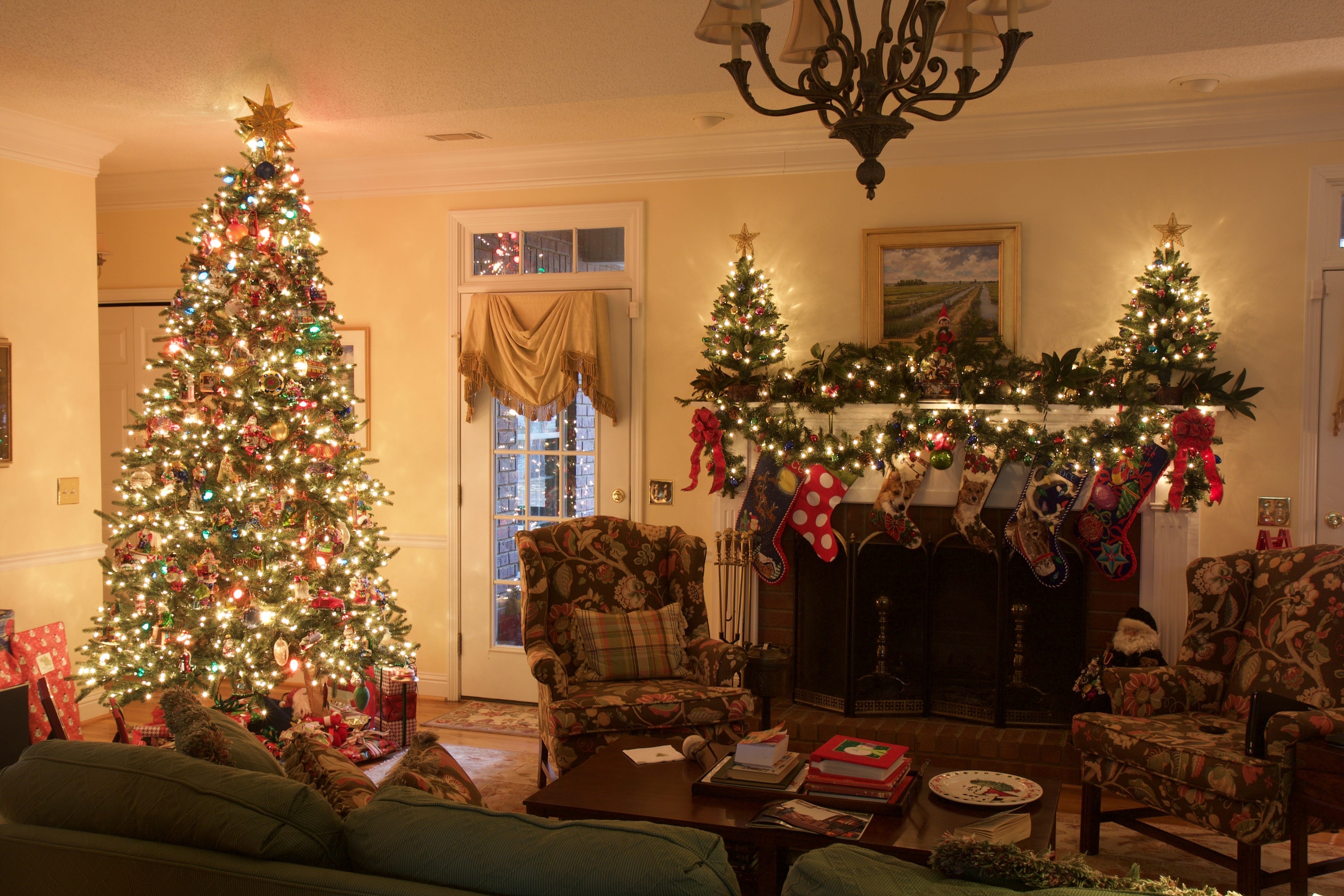
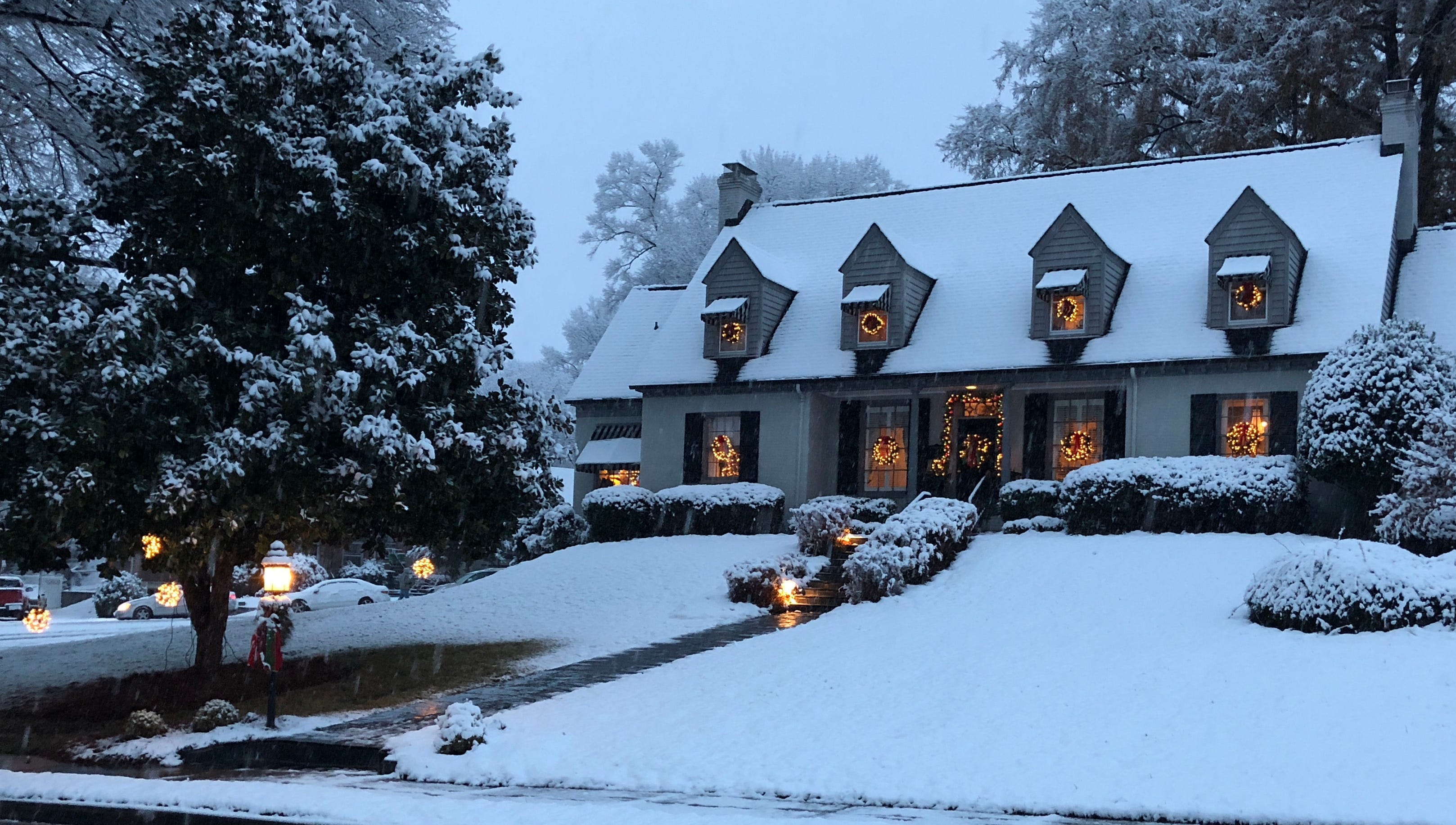
The table was laid with special Christmas china and the real silver. Crystal sparkled. Everything was washed by hand. Placemats and napkins were ironed. Live greenery and their associated smell filled the house—four fireplaces dressed with lighted garlands and fresh branches.
The house didn’t just look like Christmas.
It participated in it.
My mother once told my Aunt that her house looked like a department store. She meant it was tacky, I took it as the highest compliment.
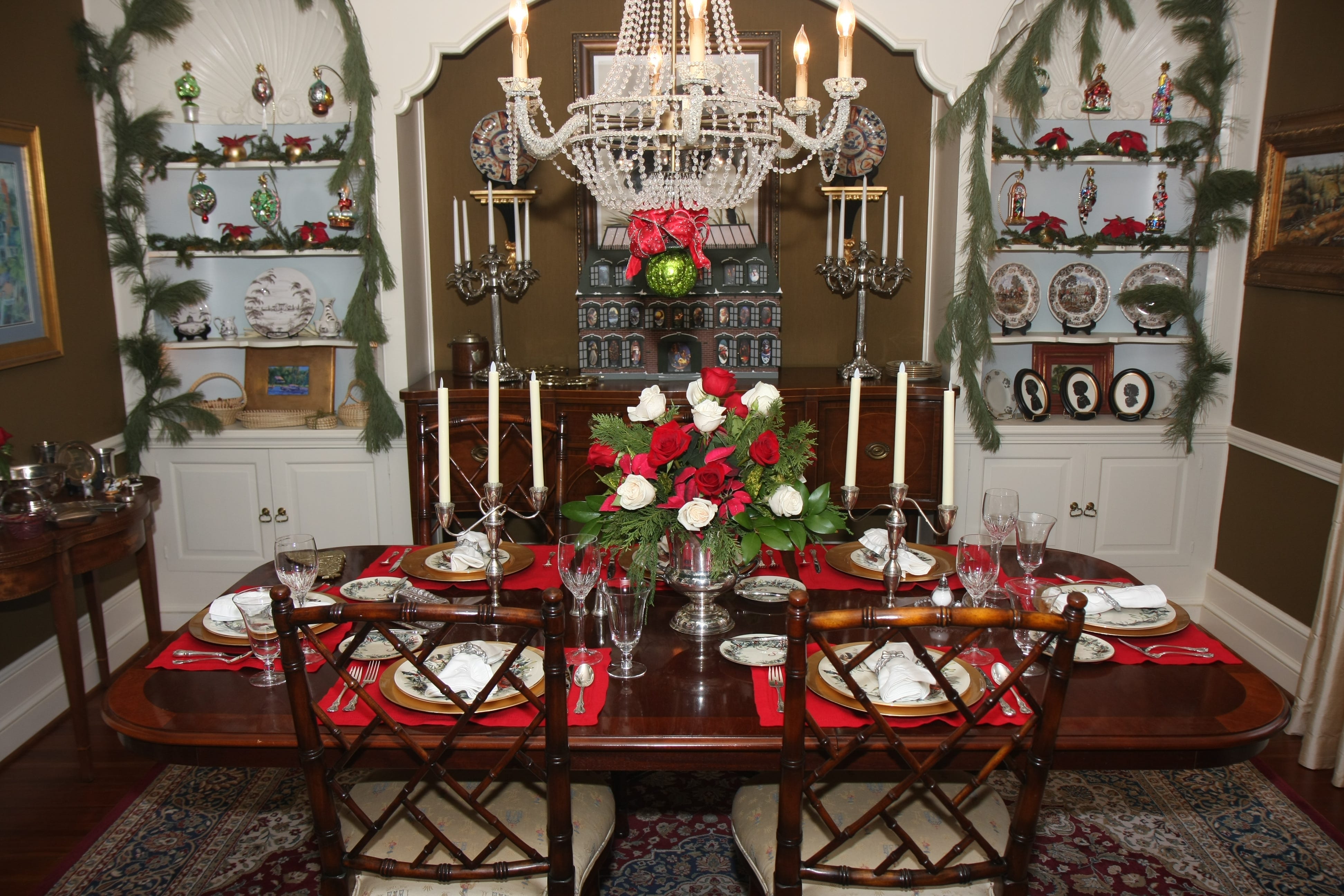
I always made the beef tenderloin, which was my family’s tradition. It was the centerpiece of Christmas dinner, and I cooked it slowly every year until the price crossed into the astronomical range. If anyone doubts how much beef prices have risen, I watched it happen in real time, year by year, because it was almost the only grocery shopping I did myself. Traditions don’t just ask for effort. They ask for sacrifice, and sometimes they quietly price themselves out of reach.
Decorating was mostly my domain. I handled the scale, the structure, the timing—the trees, the lights, the rooms transforming one by one. But my ex-wife, also a florist, stepped in and took over the live greenery and bows, the flower arrangements that softened everything I’d built. We complemented each other that way. I wanted impact. Big bang for the buck. I don’t have the patience for fine adjustments. She did. Where I built the world, she gave it breath.
When people entered our house for the first time at Christmas, there was often a pause. A visible one. Even if they didn’t recognize the brands or know the lineage of what they were seeing, they sensed immediately that something was different. The ornaments sparkled more. The light felt warmer. The house smelled like Christmas in a way that couldn’t be faked.
Tasteful, but excessive.
Deliberate.
The bows were elaborate. The greenery was real. The lights were everywhere, but never harsh. Even the wet bar packed itself up for the month and reappeared transformed—Christmas glasses, ice buckets, tools, towels. Long after I let go of the It’s a Wonderful Life village, I kept the Martini’s bar from it displayed on our own bar every December, the way my aunt once had. Some objects stop being decorations and become anchors. They tell the room what season it is without explanation.
The living room tree—the formal one—took the better part of a day to decorate. I started by filling the interior with simple round ornaments to give it depth, then moved outward, wiring each blown-glass ornament in place one by one. It wasn’t that I forbade help. It was that no one else wanted to do it that way. I recognize now that it probably took all the fun out of it.
One year my mother individually boxed and wrapped all twelve of the Christopher Radko Twelve Days of Christmas ornaments. She knew I loved them and at first I thought she had given me hers—but she hadn’t. She had been buying them for me one by one over the years, lacking only the first and hardest to find. That Christmas I was stunned to see it, still in its original box. She later told me it had been my aunt’s, who had passed away a couple of years earlier. She had asked my cousins to track it down, happy to do it because they knew how much I loved Christmas.
Each year, I unboxed and reboxed every ornament as if it were new. I never counted them. I just knew how many hooks I needed. I bought roughly a thousand ornament hooks every year and usually had only a handful left over. When we eventually divided the ornaments as part of the divorce, we did it the way other couples divide precious assets—deliberately, carefully, acknowledging their value without quite knowing how to explain it.
Even when we switched to artificial, pre-lit trees, I couldn’t leave them alone. I added colored lights anyway. Sometimes vintage C7s. Sometimes bubble lights. Eventually I settled on a particular incandescent GE bulb that mimicked the look of modern LEDs before LEDs existed. I held onto incandescent lights long past the point of reason, long past the point of safety. I never met a strand of lights I couldn’t get working again. I still don’t like LEDs. They work, but they don’t feel right.
Eventually, I learned to slow it down. I started decorating on November 1st, a little each day—not because I was in a rush, but because I wasn’t. The villages came out first, then the bar, then the trees one by one. By Thanksgiving, the house was transformed. The outdoor lights went up the weekend after.
I didn’t want to spend December running around like a nut trying to get everything ready. I wanted to enjoy it. That was the point. Starting early meant the work was done before the season arrived. My wife handled it the same way—Christmas shopping finished well in advance. By the time December began, the house was ready, the gifts were wrapped, and the calendar was open.
Christmas wasn’t something we were chasing.
It was something we lived inside.
We moved for my job every few years, which meant the house itself changed constantly—new layouts, new light, new proportions. But the decorations stayed the same. No matter where we landed, Christmas looked like us. The rooms shifted. The rituals held.
In house hunting, I imagined what each place would look like at Christmas. Where the tree would go. Where the villages could be placed. If a house had more than a 200-amp electrical panel, I immediately imagined the exterior illumination possibilities. One house had two 200-amp panels and outlets pre-installed in all the flower beds. I had my checkbook out as soon as I saw it. My ex-wife thought I was crazy. I would send my mother the Zillow link, and her first response was usually, Oh, that will look good at Christmas.

On December 1st, the Advent House came out. The kids took turns opening the doors each night, carefully, seriously, as if the house itself were watching. I didn’t explain it. I didn’t direct it. I just watched. I think I installed the magic in them. I hope they do the same one day for their own families. My parents and my in-laws loved it. We had the first grandchildren, and when that happens, you understand how quickly wonder becomes a shared resource.
There is a scene in Christmas Vacation that most people laugh through and forget. Clark Griswold, trapped in the attic, falls through the floor and ends up watching old home movies—grainy footage of himself as a child, sledding, laughing, Christmas lights glowing in a simpler time. The scene is meant to be comedic, but the joke almost hides the truth.
That’s what Clark is trying to do.
He’s not trying to build the perfect Christmas.
He’s not trying to impress anyone.
He’s trying to get back to the feeling he had when he was small enough to believe it would always feel that way.
I understood that scene differently once I had children of my own. I wasn’t trying to recreate my childhood for myself. I was trying to make sure my children had something they could someday try to get back to—something solid enough to remember, and forgiving enough to survive disappointment.
The best Christmas we ever hosted came out of preparation—and then failure.
My wife belonged to a women’s group that met all year, and once a year the husbands were invited to participate. It was our turn to host, and we went all out. I scoured every HomeGoods and Marshalls in driving distance to find nearly fifty matching Christmas cocktail glasses. I would die before serving someone a drink in a plastic cup. Fires were lit everywhere. All the lights were on. The house was ready.
About thirty minutes in, the power went out. I remember thinking, Of course. The house was seventy-five years old with original wiring, and I was sure I’d finally pushed it too far. When I looked outside, the houses around us were still glowing. A car accident nearby had knocked out a transformer that served only a handful of homes on our street.
I was certain everyone would leave. Instead, we lit more candles. We kept the fires going. People talked, laughed, lingered late into the night. Years later, people still said it was the best Christmas party the group had ever thrown.
Most people never really saw the decorations.
But they felt the house immediately. The warmth was already there—the smell of Christmas in the air, candles glinting off china and crystal, firelight moving across the walls. The room crackled. Drinks flowed too freely. No one asked what had happened. No one checked their phones. People stayed where they were.
That was the night I finally understood what all those years of preparation had been for. Christmas doesn’t collapse when the lights go out. If it’s been built carefully enough, the warmth holds. The spectacle can disappear and the feeling remains.
I didn’t lose Christmas when I grew up.
I learned what Clark was trying to do all along.
Stay Connected
📖 Subscribe to Caleb Reed for weekly chapters and essays.
📸 Follow along on Instagram: @caleb_writes
📘 Facebook: Caleb Reed
🦋 Bluesky: @thecalebreed.bsky.social
Great holiday story. Once again, the pursuit of somebody's perfection is trumped by a connection and just being there. Thanks for sharing.