

My First Trip to New York, Properly
My first trip to New York didn’t feel like an arrival. It felt like I had finally stopped arriving.

Author’s note: This is the second essay in a series about firsts, what it feels like to come out later in life. If you are just catching up, start here:
That sounds backward, but it’s the only honest way to describe it. I hadn’t been there as a kid. I hadn’t visited on school trips or work conferences. I didn’t have an origin story with the city. This was my first time, period. And instead of feeling dazzled or overwhelmed, I felt something quieter and more disorienting.
I felt caught up.
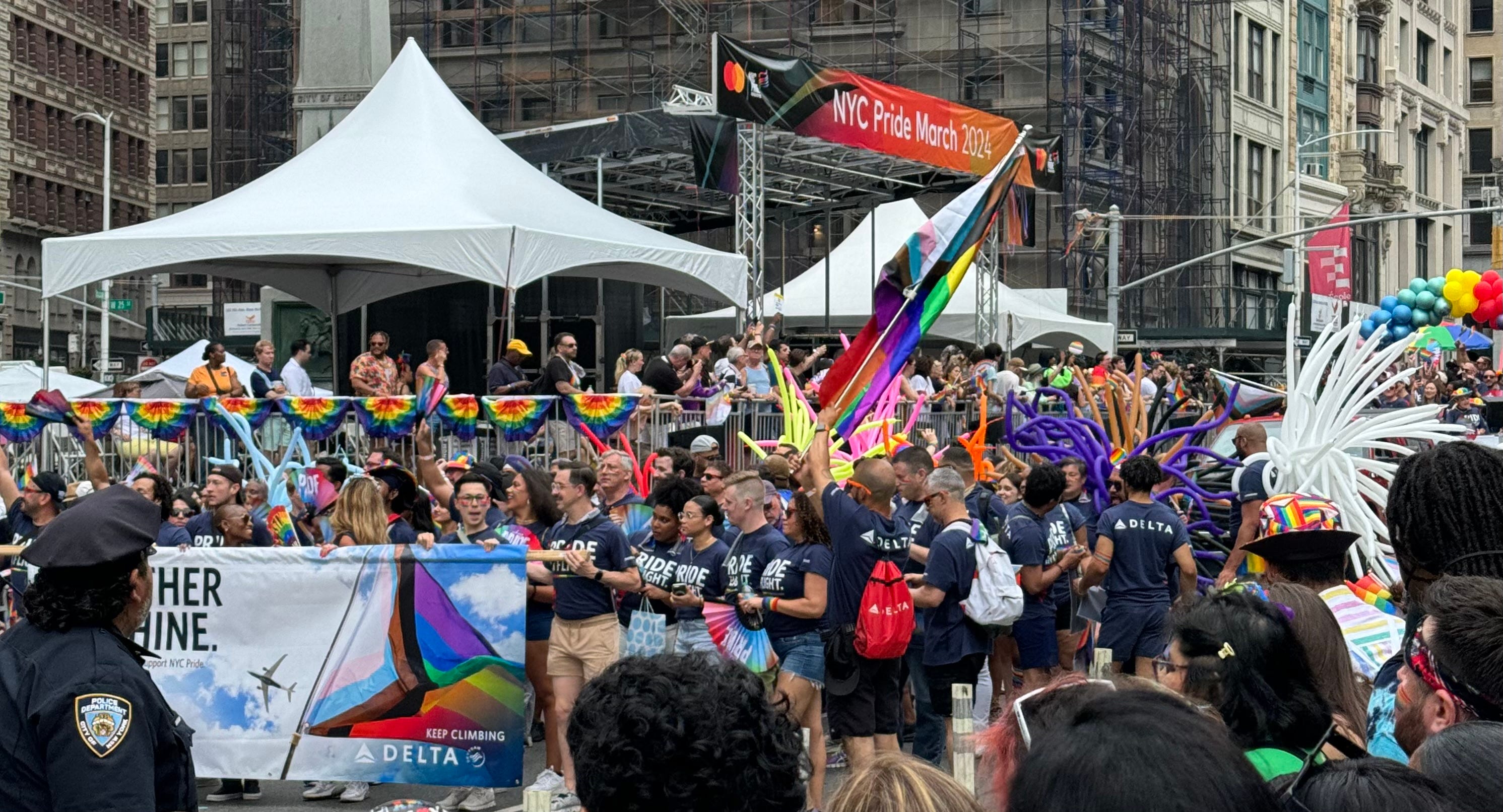
I came during Pride weekend, though that detail matters less than you might expect. Pride wasn’t something I traveled to New York for so much as something I walked into. The city was already in motion when I arrived. Louder, fuller, unconcerned with whether I was ready. Rainbow flags in windows. Groups forming and dissolving on sidewalks. Couples holding hands without checking who might be watching.
It felt like stepping into a conversation that had been going on for a long time without me.
For most of my life, I had worked very hard to appear straight, or at least masculine enough that no one would bother looking too closely. I grew up in a small town and spent most of my adult life in small towns. In those places, being gay didn’t just mean being different. It meant being other. Marked. Explained. I didn’t want to feel that way, so I learned how not to.
The editing started early and became subconscious. I didn’t think of it as hiding so much as calibrating. Adjusting posture. Monitoring tone. Being careful with gestures. Filing away interests or curiosities that felt like they might give me away. By the time I was grown, it wasn’t something I actively decided anymore. It was just how I moved through the world.
If you’d passed me on the street, you would have clocked me instantly, just not in the way that mattered. Middle-aged, preppy, former frat guy. Probably married. Probably with a stay-at-home wife and three adorable kids. A man who knew how to belong anywhere by asking very little of the space around him.
I had spent decades mastering that version of normal.
So when I arrived in New York and realized the city wasn’t paying attention to me at all, it took a minute to register.
New York did not notice me.
No one looked twice. No one tried to place me. No one seemed to care where I was from or what I was still figuring out. I moved through the city the way everyone else did, instinctively adjusting my pace, learning the choreography by osmosis. Crossing streets without thinking. Standing on corners without scanning faces.
You don’t audition for New York. You participate.
My first walk through the Village happened almost immediately. I headed south with intention I pretended not to examine too closely. What struck me wasn’t excitement or adrenaline, but relief.
A gay man walking down the street there was about as unusual as the sun coming up.
That was the revelation. Not joy. Not celebration. Normalcy. The kind that doesn’t congratulate you or ask how you got there. The kind that assumes your presence makes sense and moves on.
It was freeing in a very specific way.
Not the loud, performative freedom people like to talk about. Not self-expression as spectacle. But the freedom of not having to monitor yourself. Of not constantly scanning rooms. Of not worrying about who might be watching for you to make a mistake.
For the first time in a long time, I could breathe easier.
I noticed it in my body before I noticed it emotionally. My shoulders dropped. My pace changed. I stopped doing that constant background scan I’d always done without realizing it. I let myself look at other people, at men, and when our eyes met, I smiled or nodded in a way that said, I see you. And sometimes they nodded back, as if to say, Yes. I see you too.
It felt safe. It felt normal. And then, almost immediately, I wanted to move there.
Intellectually, I had always known that most people don’t give a second thought to the strangers around them. Ninety-nine percent of us are invisible to one another most of the time. But growing up closeted does something strange to your sense of scale. You feel as though all eyes are on you, waiting for you to slip. Waiting for you to reveal yourself accidentally.
In the Village, that illusion collapsed.
There were queer people of every age, shape, and size. Couples. Singles. Groups of friends. People who looked nothing like me and people who looked exactly like they could have been. And it was all fine. All unremarkable. All already accounted for.
I wandered in and out of a few bars that night. Nothing dramatic. A drink here. A pause there. Doors open to the street. Music spilling out and dissolving into the evening air. No one asked why I was there. No one asked who I was with. No one asked what this meant.
In smaller places, bars feel like auditions. You’re aware of being evaluated, even when nothing is explicitly at stake. In the Village, they felt like infrastructure. Places built to hold people who had already decided they belonged somewhere.
Earlier that day, I had gone into The Leatherman, a leather shop I’d carried around in my imagination for years as something faintly intimidating. Growing up, leather had been framed as the outer edge of gay life. Deviant. Aggressive. A caricature. The Blue Oyster Bar (from the Police Academy franchise) version of a world you weren’t meant to enter unless you were ready to be laughed at or feared.
That image had done its work on me. I had spent years assuming that curiosity itself was a kind of admission. That wanting to know more meant something dangerous or embarrassing about me.
Going in, I was afraid to admit that I was curious at all. I assumed I would still be the same person I had always been, just gay now. Instead, I found that I had a genuine interest and wanted to learn more. That realization came with its own fear.
I worried I was too old for any of this. That my body wasn’t something people wanted to see. That I would be humored politely and joked about after I left. I hadn’t planned to try anything on. I certainly hadn’t planned to expose myself in any meaningful way.
As soon as I stepped downstairs into the shop, all of that melted.
The space was bright. Clean. Orderly. Leather folded and hung with the precision of a place that takes materials and people seriously. No pulsing music. No performative edge. Just mirrors, racks, and staff doing their jobs.
I told the guy helping me what I was looking for. He didn’t blink. Asked my size. Asked how I wanted it to sit. Practical questions. Measurement questions. The kind you ask when the goal is fit, not fantasy.
The changing area was makeshift, the way New York interiors often are. A partition, a mirror, enough privacy to do the job. I stepped out of my clothes and stood there in nothing but a full-body harness while he adjusted straps, checked tension, and made small, efficient corrections.
At one point I mentioned that one piece didn’t feel quite right, that I might need a larger size. He nodded and checked himself, the way a tailor does when something pulls unexpectedly. Matter-of-fact. No hesitation.
The curtain was pulled back just enough to let in light, and I became dimly aware of other customers passing by. No gawking. No shock. One or two nodded almost imperceptibly, the way people do when something simply makes sense.
Then they kept moving.
What stayed with me wasn’t exposure. It was calm.
We talked through other options. I bought a leather jockstrap with a snap-off pouch. We discussed color choices briefly, referencing the old hankey code the way you might reference tailoring conventions. Not instruction. Context. A shared language that once helped people find one another when there were fewer safe ways to ask directly.
At one point, he asked what I was into. Not as a test. Not as a provocation. Just a practical question.
I answered honestly.
He nodded, showed me what they had that aligned with it, and mentioned, almost as an aside, that he was into the same. He was about my age, which helped more than I expected. In my prior life, this was something I would have been mortified for anyone to know. Here, we were simply commiserating.
It was the most normal thing in the world.
That small moment shut up an old voice I’d been carrying for years. The one that insisted my interests were strange or isolating or worthy of ridicule. It dismantled the belief that curiosity had to be defended or explained.
This wasn’t transgression. It was logistics.
The whole experience felt closer to buying a well-made suit than anything I’d been warned about. The staff were proud of their store, their work. They talked about leather the way a tailor talks about wool. Small things I hadn’t noticed were adjusted without comment. A leather smith took the piece and added an extra snap here or there.
That was the shock of it. Something I’d internalized as a fetish had a storefront in New York City, and it was the most ordinary thing imaginable.
When I left the store, fully dressed again with the bag in my hand, I didn’t hide it. I carried it without thinking. I’d chosen the jockstrap in a color that aligned with my kink, and I felt oddly anchored by that fact.
Honestly, I wanted to go straight to the Eagle. My traveling companions gently convinced me I wasn’t quite ready for that yet. They were probably right.
I stepped back into the Village. Pride continued around me, already softening into evening. People leaned into one another on stoops. Laughter drifted. No one was watching.
The city kept going.
That was the point.
I do feel sadness that it took me so long to come out in general. I missed some things. I know that. There are experiences I’ll never have, versions of myself that only exist hypothetically. At the same time, I wouldn’t have my three wonderful children if my life had unfolded differently.
Things happen for a reason. Or at least they happen, and you learn how to live with the shape they make.
What I learned that weekend is that there are places you can go and not feel different. Places where you can walk into a gay bar and the music doesn’t stop while everyone turns to stare. Places where it doesn’t matter if you don’t look like the people you’re conventionally attracted to. Places where you can take your shirt off to dance and not worry who’s watching.
You learn quickly that they aren’t.
And you learn that it doesn’t matter what you look like with your shirt off. It’s the uninhibited part that counts. The letting go. The refusal to keep managing yourself for other people’s comfort.
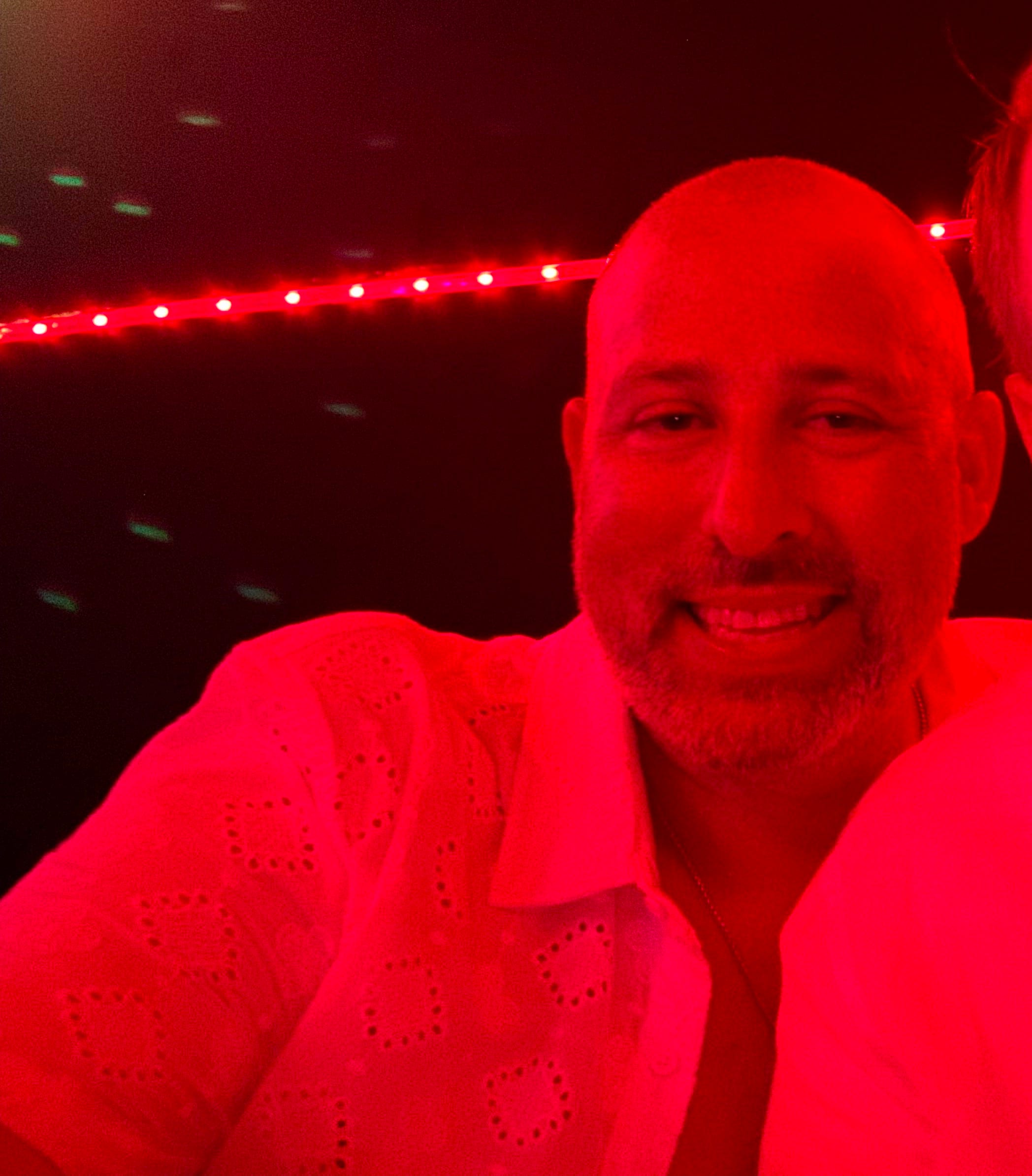
New York didn’t give me permission. It revealed I’d been holding it unnecessarily.
The Village didn’t celebrate me. It absorbed me.
Sometimes the most meaningful first trips aren’t about discovering something new. They’re about realizing how much energy you’ve spent trying not to be noticed.
That weekend, on my first visit to New York, I learned what it felt like to be ordinary in the best possible way.
And once you experience that kind of normal, it’s very hard to accept anything less again.
Stay Connected
📖 Subscribe to Caleb Reed for weekly chapters and essays.
📸 Follow along on Instagram: Caleb Writes
📘 Facebook: Caleb Reed
🦋 Bluesky: @thecalebreed.bsky.social
They’re about realizing how much energy you’ve spent trying not to be noticed. Thank you Caleb. 62 , 3 kids and 3 grandkids, and finally living fully open, your thoughts resonate SO deeply❤️
Great story. Visiting New York has always felt like a highly liberating experience for me. There was an openness and freedom of movement there that I didn't feel anywhere else when I first started going there in the 90s. I still love my periodic visits!