



When Eric Dane died yesterday, most people remembered him as “McSteamy” from Grey’s Anatomy. Or they remembered the prosthetic from Euphoria — the grotesque foyer scene that turned into a meme.
I never watched Grey’s Anatomy. Nothing against it, but when you work in a hospital every day, you don’[t really watch shows about them. Plus, they irritate me, if I’m being honest.
And the prosthetic isn’t what stayed with me.
I remember the basement.
I started watching Euphoria during a suspended stretch of my life. I had taken a leave of absence from work. For the first time in decades, I wasn’t running anything. No meetings. No performance metrics. No decisions that affected hundreds of people.
Just quiet.
Too much quiet.
So I clicked on Euphoria because HBO prestige drama felt like a safe distraction. I wasn’t looking for insight. I wasn’t looking for a mirror.
Then the flashbacks began.
Cal and Derek in high school. The basement. The beer. The music. Two boys orbiting each other with that electric closeness that feels ordinary when you’re inside it and seismic when you look back.
And then the kiss.
Watching Cal remember Derek — watching him revisit the life he didn’t choose — did something to me that no book had managed to do.
Because I had a Derek.
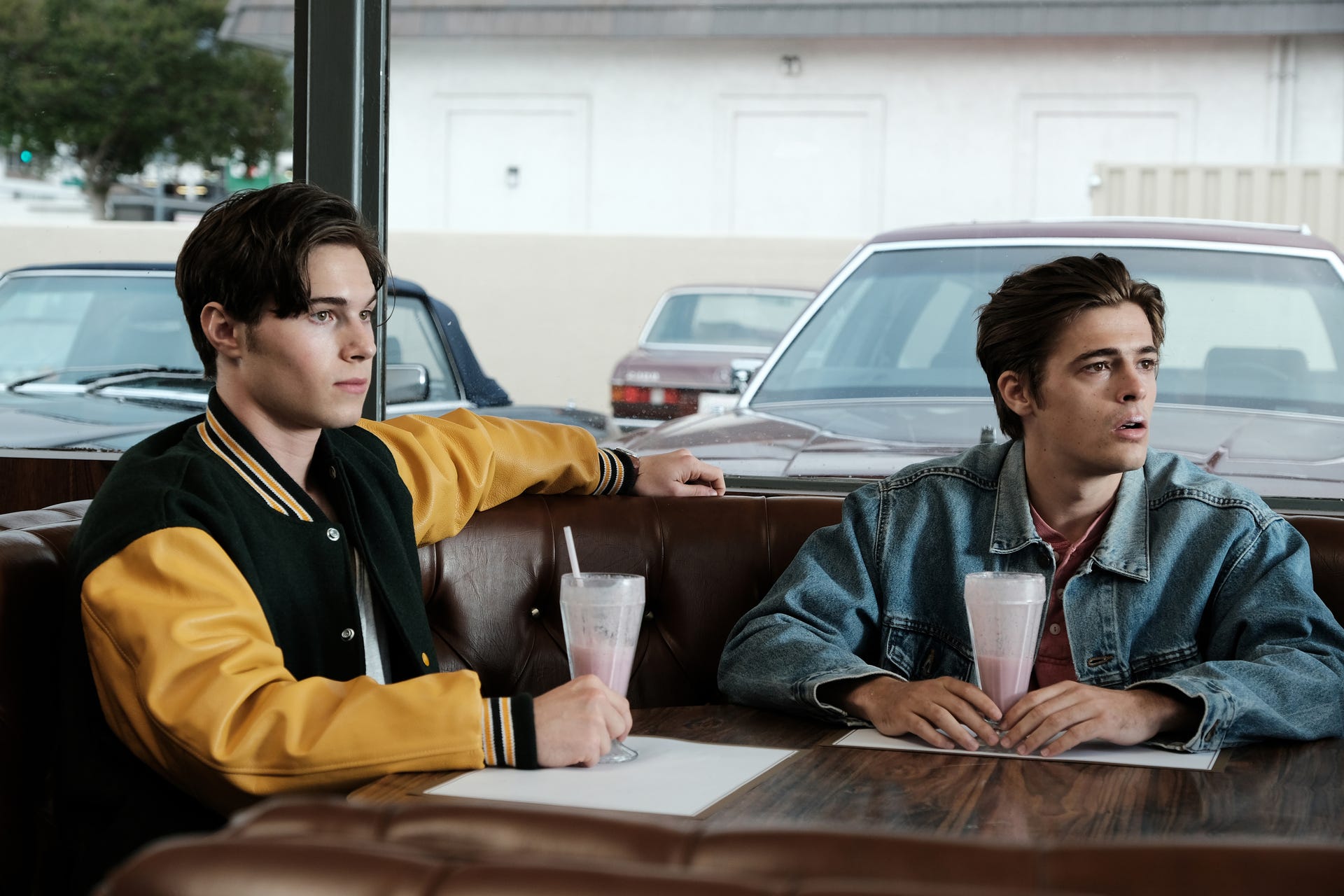
His name was Billy.
I’ve written about him before. At the time, I softened the language. Intensity. Friendship. Brotherhood. I told the story in a way that kept it respectable.
But sitting there, middle of the day, house quiet, watching Eric Dane play a man flashing back to the boy he once loved, I understood something I had been editing out of my own history.
Billy wasn’t just a friend.
I loved him.
Not theatrically. Not dramatically. Quietly. In the way you rearrange yourself around someone. In the way your body recognizes something before your vocabulary does.
I don’t defend Cal Jacobs. He cheated. He lied. He became cruel. He hurt his family. That isn’t noble. That isn’t romantic.
But in those flashbacks, before the bitterness, I saw the fork in the road.
Most viewers saw the spectacle.
I saw the fork.
I was already unraveling when I watched those episodes. Twenty years married. Three children. A career that required clarity and command. From the outside, everything worked. From the inside, something was splitting.
The leave of absence created space for the truth to get loud.
Cal’s story is what happens when you bury one version of yourself long enough that it ferments. When you marry the girl. When you convince yourself the boy was confusion. When you build a life that functions but doesn’t quite fit.
I remember pausing the episode and feeling something close to dread. Not because I was living Cal’s double life. I wasn’t cheating. I wasn’t sneaking into hotel rooms.
But I recognized the architecture of suppression.
And I could see how it ends.
Coming out later in life wasn’t cinematic. It wasn’t a drunken confession in a foyer. It was paperwork. Divorce. Therapy. A custody schedule. Grief that felt like a death. It was telling my children something that would reshape their understanding of our family.
It was choosing rupture over rot.
Eric Dane didn’t inspire me in the way a motivational speaker inspires someone. He portrayed a man who waited too long. Watching that portrayal forced me to admit that I had loved Billy, and that minimizing that truth had shaped my entire adult life.
I never watched him on Grey’s Anatomy. I didn’t follow his career. I didn’t know him.
But for a few episodes of a television show, he held up a mirror at exactly the moment I was finally still enough to look.
Most people will remember the prosthetic.
I’ll remember the basement.
And the boy I stopped pretending was just a friend.
Further Reading
II keep a running collection of books that shaped this project on Bookshop.org.
Purchases there support independent bookstores—and help sustain this work.
Stay Connected
📖 Subscribe to Caleb Reed for weekly chapters and essays.
📸 Follow along on Instagram: @caleb_writes
📘 Facebook: Caleb Reed
🦋 Bluesky: @thecalebreed.bsky.social
Editing gay love out of one's story when young is a reasonable thing to do, given the state of the world then, and even now. But 20 years of marriage, 3 kids. WTF! Choosing rupture over rot: a Sophie's choice. Can't imagine the emotional and economic upheaval amongst the 4 of you. But it sounds like you all came out ok on the other side. Not by luck, but by strength of will, honesty, respect and love. Good on you